
CAB PR SAFETY VALVE OPEN
An amber caution: a safety valve has stayed open. Here is what the two safety valves protect, how the procedure splits between too much and too little differential pressure, and what MODE SEL at MAN hands the crew, with the live aircraft at the moment the caution comes on.
Written and checked by current A320 pilotschecked against the FCOM on Our editorial policy
What CAB PR SAFETY VALVE OPEN means
CAB PR SAFETY VALVE OPEN is an amber caution: a cabin safety valve is not fully closed, on the ground at once, in flight for more than 1 min. The two safety valves keep the cabin from going 8.6 PSI above or 1 PSI below the outside air.
The procedure has two branches. Above 8 PSI the crew takes the outflow valve by hand, MODE SEL to MAN and MAN V/S CTL as required, and reduces the flight level if that does not work. Below 0 PSI, it warns of a high cabin rate and asks for a lower aircraft vertical speed.
Sources FCOM PRO-ABN-CAB_PR CAB PR SAFETY VALVE OPEN / FCOM DSC-21-20-20 SAFETY VALVES / FCOM PRO-ABN-CAB_PR CAB PR
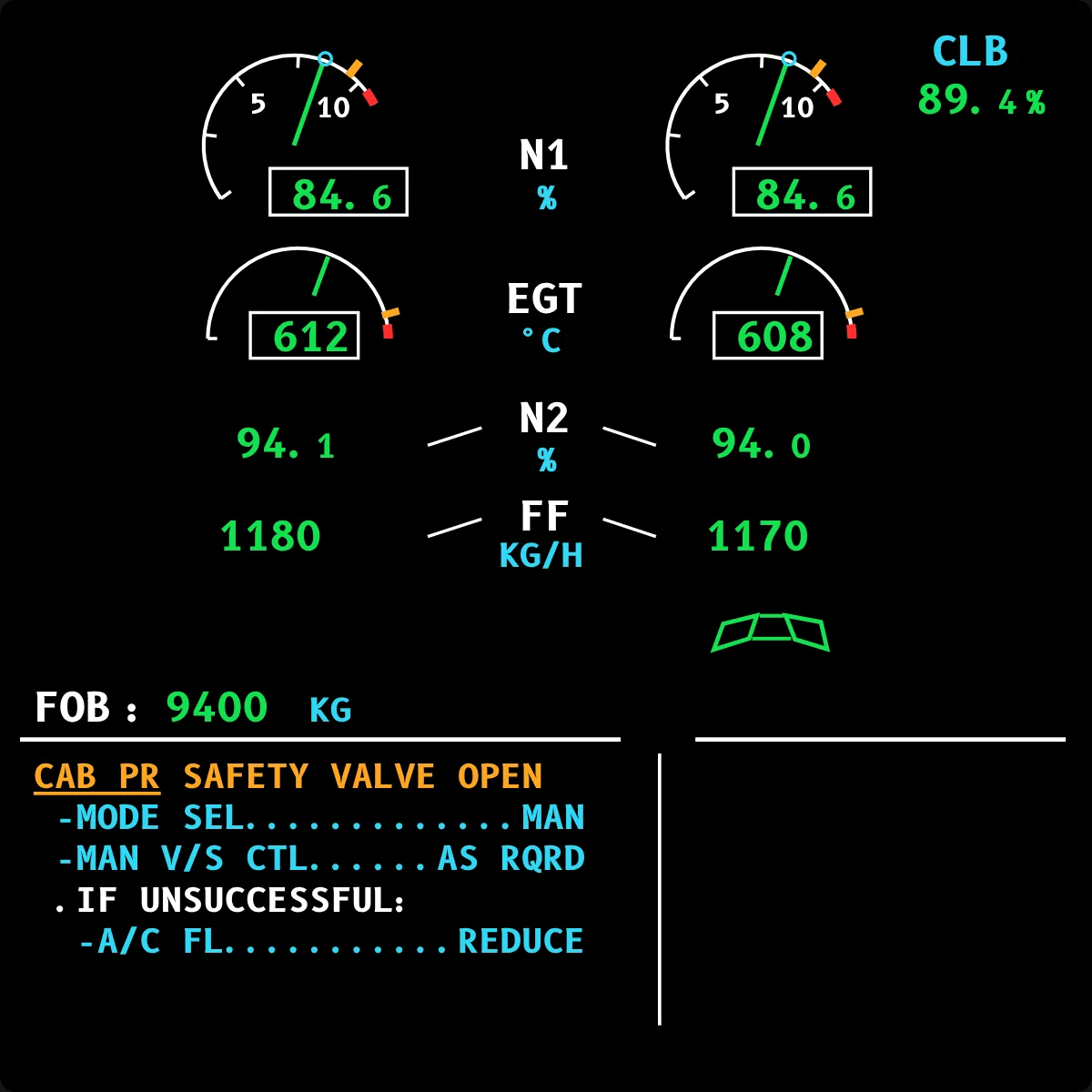
At a glance
- Level
- Amber caution, level 2: single chime, MASTER CAUT and, except in some cases, the CAB PRESS page on the SD
- Sets it off
- On the ground, a safety valve not fully closed; in flight, not fully closed for more than 1 min
- The valves
- Two independent pneumatic safety valves keep the cabin from going 8.6 PSI above or 1 PSI below the outside air
- On the SD
- SAFETY and its diagram in amber when either valve is not closed
- Procedure
- Above 8 PSI: MODE SEL MAN, MAN V/S CTL as required, and if unsuccessful A/C FL REDUCE. Below 0 PSI: EXPECT HI CAB RATE, A/C V/S REDUCE
Sources FCOM DSC-31-10 WARNING/CAUTION CLASSIFICATION / FCOM DSC-31-30 ATTENTION GETTERS / FCOM DSC-31-20 SYSTEM PAGES / FCOM PRO-ABN-CAB_PR CAB PR SAFETY VALVE OPEN / FCOM DSC-21-20-20 SAFETY VALVES / FCOM DSC-21-20-40 ECAM CAB PRESS PAGE / FCOM PRO-ABN-CAB_PR CAB PR
What makes a safety valve open?
Two independent pneumatic safety valves sit on the rear pressure bulkhead, above the flotation line. They prevent the cabin pressure from going too high, 8.6 PSI above the outside air, or too low, 1 PSI below it.
The CAB PRESS page description gives the opening as between 8.2 and 8.9 PSI of differential pressure. The FCOM puts the range down to the reduced accuracy of the measurement in MAN mode and to the drop in differential pressure as soon as the valves open.
The caution triggers on the ground if a safety valve is not fully closed, and in flight if it is not fully closed for more than 1 min.
Sources FCOM DSC-21-20-20 SAFETY VALVES / FCOM DSC-21-20-40 ECAM CAB PRESS PAGE / FCOM PRO-ABN-CAB_PR CAB PR SAFETY VALVE OPEN
Too high or too low, the safety valves open
What does the crew see and hear?
A level 2 caution: a single chime, MASTER CAUT steady amber, the caution in amber on the E/WD, and, except in some cases, the CAB PRESS page called up on the SD.
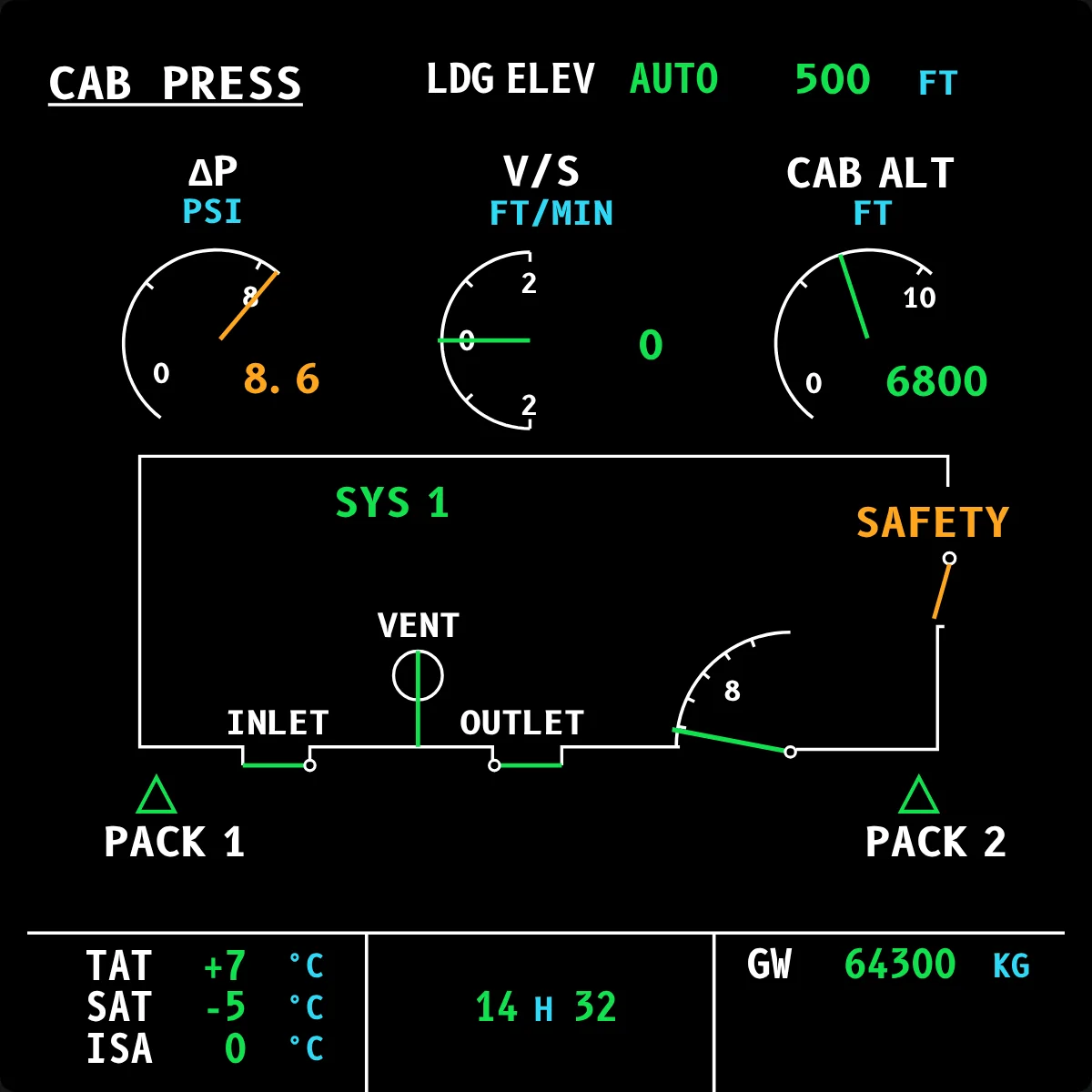
On the CAB PRESS page, SAFETY is normally white with its diagram green while both valves are fully closed; both turn amber when either valve is not closed. The differential pressure turns amber at or above 8.5 PSI, or at or below -0.4 PSI.
Sources FCOM DSC-31-10 WARNING/CAUTION CLASSIFICATION / FCOM DSC-31-30 ATTENTION GETTERS / FCOM DSC-31-20 SYSTEM PAGES / FCOM DSC-21-20-40 ECAM CAB PRESS PAGE
The moment the caution comes on
In the cruise, system 1 in control, the cabin at 6 800 ft and the differential pressure already 8.6 PSI, in amber. Press the button to open a safety valve, then look at the E/WD and the CAB PRESS page.
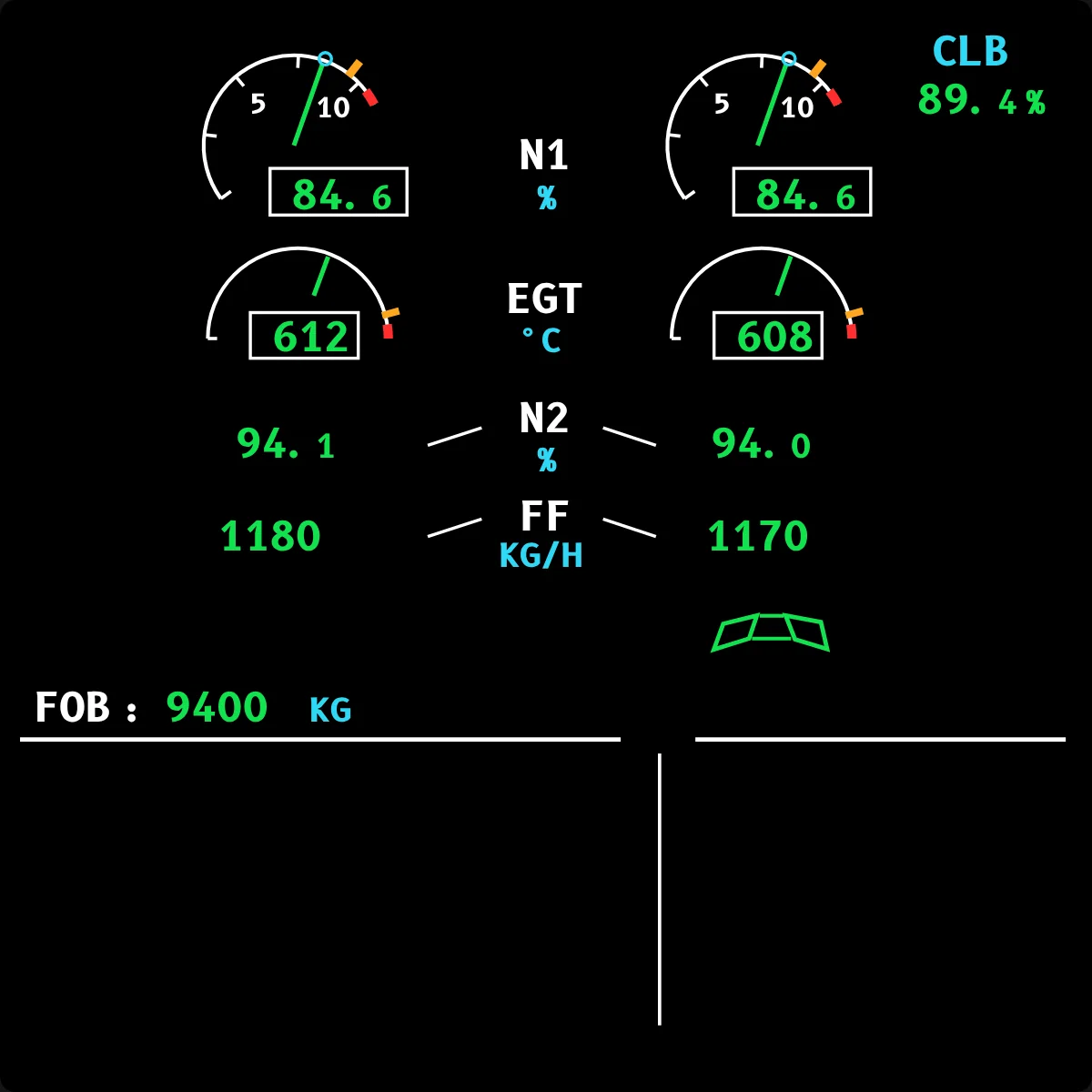
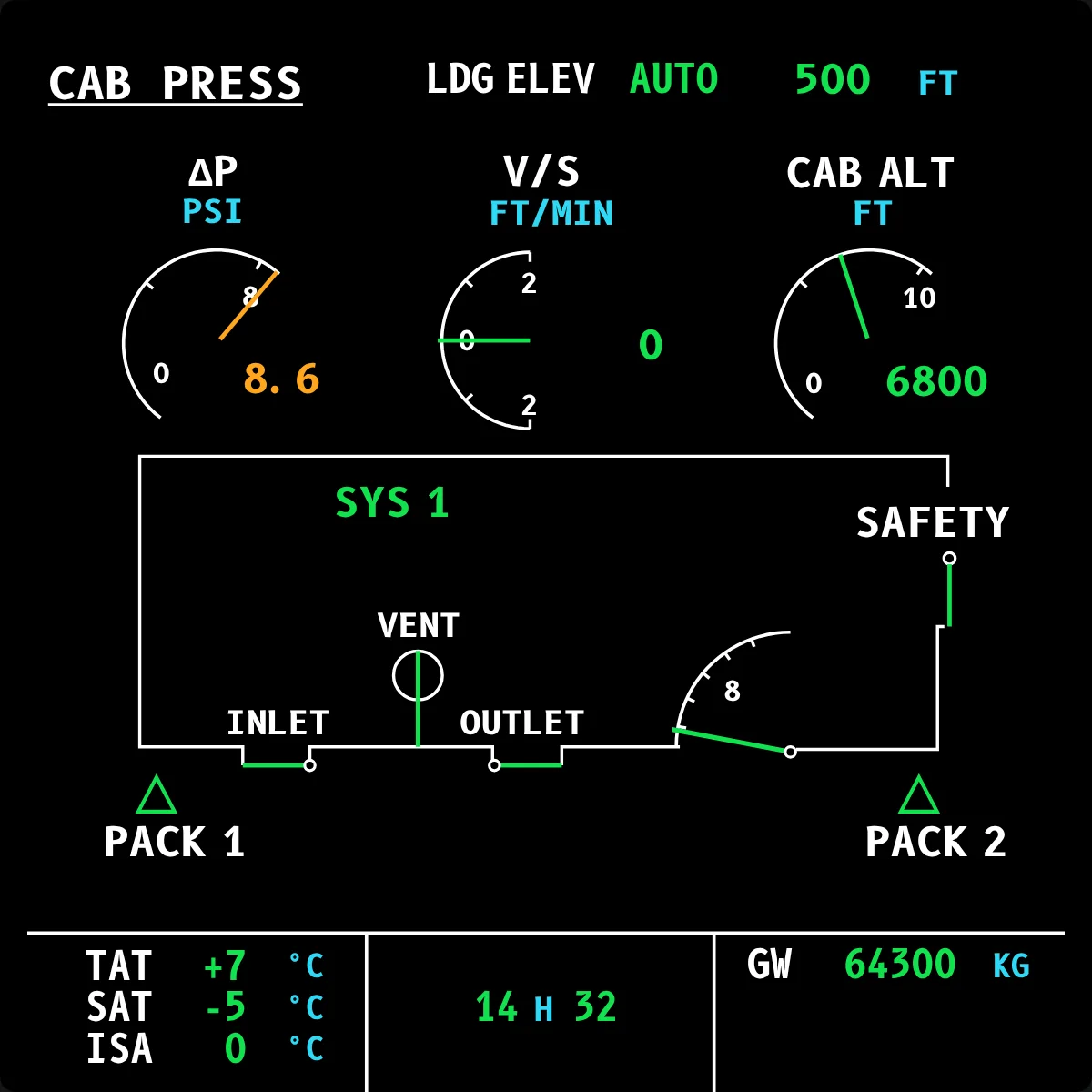
The alert Open a safety valve
The E/WD shows the caution in amber with the lines for a differential pressure above 8 PSI: MODE SEL MAN, MAN V/S CTL AS RQRD, then IF UNSUCCESSFUL with A/C FL REDUCE under it. On the CAB PRESS page, SAFETY and its diagram are amber.
The drawing raises the caution as soon as the valve opens. In flight, the FCOM gives it once a valve has not been fully closed for more than 1 min.
Sources FCOM PRO-ABN-CAB_PR CAB PR / FCOM DSC-21-20-40 ECAM CAB PRESS PAGE / FCOM PRO-ABN-CAB_PR CAB PR SAFETY VALVE OPEN
What are the procedure's two branches?
The safety valves open for too much differential pressure or for too little, and the FCOM prints two branches, each under a black square: IF DIFF PR ABV 8 PSI and IF DIFF PR BELOW 0 PSI. Black squares mark parts of a procedure of which only one applies, and the ECAM does not display them.
Above 8 PSI, the crew goes to manual control: MODE SEL MAN and MAN V/S CTL as required, with a note to reduce the differential pressure if the overpressure is confirmed.
Below 0 PSI, the outside pressure is higher than the cabin's. The branch reads EXPECT HI CAB RATE, then A/C V/S REDUCE: the same two lines as CAB PR LO DIFF PR.
Sources FCOM PRO-ABN-CAB_PR CAB PR / FCOM PRO-ABN-ABN-00 INTRODUCTION / FCOM DSC-21-20-20 SAFETY VALVES
What does MODE SEL at MAN change?
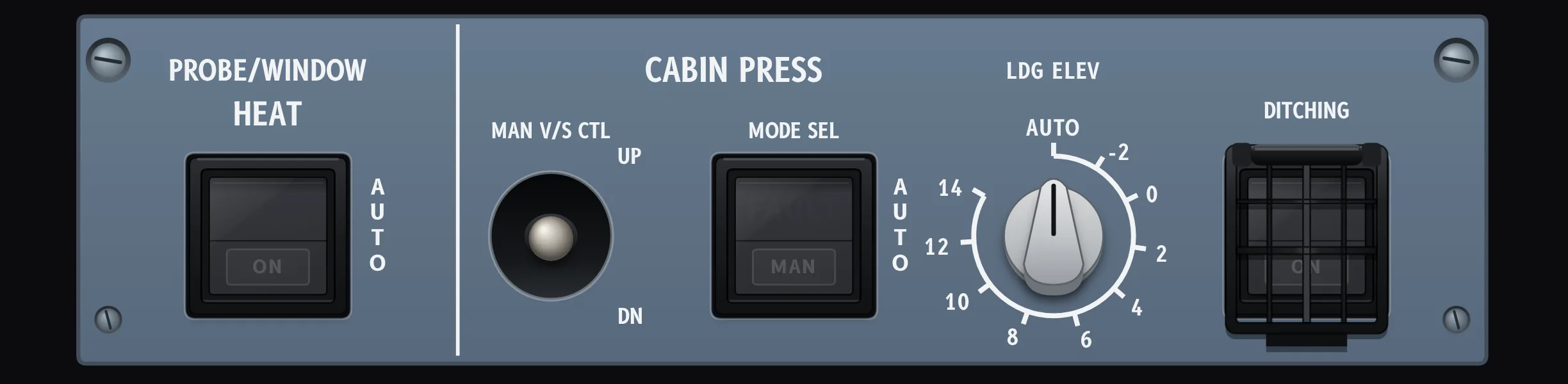
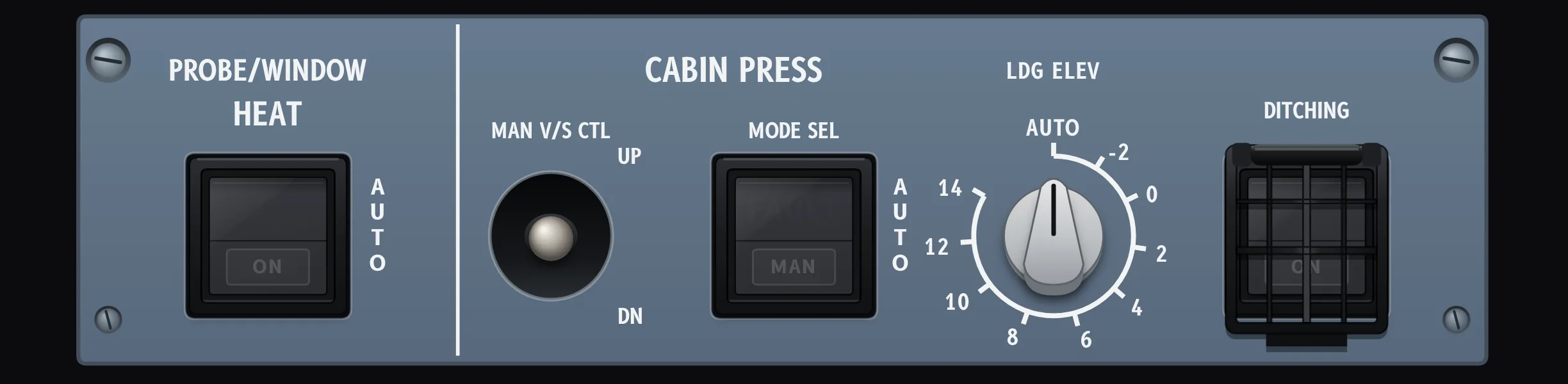
With the pushbutton at MAN, MAN shows in white and the automatic motors lose their power; the manual motor drives the outflow valve, and MAN V/S CTL moves it, UP towards open, DN towards closed. The switch is spring-loaded to neutral, and the FCOM asks for short inputs to target a precise cabin rate.
The procedure's note warns that in manual mode the crew may wait 10 s before seeing the valve move. The system description gives up to 5 s for the ECAM indication, from the valve's slow operation and the limited resolution of its position.
Sources FCOM DSC-21-20-30 MANUAL PRESSURE CONTROL MODE / FCOM DSC-21-20-40 OVERHEAD PANEL / FCOM PRO-ABN-CAB_PR CAB PR
Take the outflow valve by hand
A safety valve open, the differential pressure at 8.6 PSI, system 1 still in control. Predict first, then press MODE SEL on the panel and watch the CAB PRESS page.
-
Predict Both controllers are healthy here. What does MODE SEL at MAN take away?
Try it Press MODE SEL to MAN.
MAN lights white. On the CAB PRESS page, SYS 1 goes and MAN appears in green: the automatic motors have lost their power and the manual motor now drives the outflow valve.
In the drawing, MAN V/S CTL does not move the valve or the cabin figures, and MODE SEL back at AUTO gives control to system 1 again. On the aircraft, UP moves the valve towards open; if the overpressure is confirmed, the note asks to reduce the differential pressure. MAN for at least 10 s, then AUTO, selects the other system.
Sources FCOM DSC-21-20-40 OVERHEAD PANEL / FCOM DSC-21-20-30 MANUAL PRESSURE CONTROL MODE / FCOM DSC-21-20-40 ECAM CAB PRESS PAGE / FCOM PRO-ABN-CAB_PR CAB PR
What if manual control does not work?
Under IF UNSUCCESSFUL, the procedure has one line: A/C FL REDUCE. The FCOM gives no reason for it. Its limitations give a maximum positive differential pressure of 9.0 PSI and a safety relief valve setting of 8.6 PSI, each to within 0.1 PSI.
For a total loss of cabin pressure control leading to an overpressure, the FCOM has a QRH procedure, CABIN OVERPRESSURE, which is not displayed on the ECAM.
The FCOM prints one STATUS for the caution: MAN CAB PR CTL with its targets, and MAN V/S CTL FULL UP during the final approach. Under manual control, the system description adds, the outflow valve does not open by itself at touchdown.
Sources FCOM PRO-ABN-CAB_PR CAB PR / FCOM LIM-AIR CABIN PRESSURE / FCOM PRO-ABN-CAB_PR / FCOM DSC-21-20-30 MANUAL PRESSURE CONTROL MODE
What is lost afterwards?
STATUS is the aircraft's operational summary. The FCOM prints one STATUS for this caution, for all aircraft: MAN CAB PR CTL, printed in amber and underlined; TGT V/S: CLIMB 500 FT/MIN and DESC 300 FT/MIN and a table of cabin altitude targets, in blue (FL 390, 8 000 ft; FL 350, 7 000 ft; FL 300, 5 500 ft; FL 250, 3 000 ft; below FL 200, 0); then, during the final approach, MAN V/S CTL FULL UP in blue. It lists no inoperative system.
A note sets the differential pressure to zero on the intermediate approach, below the airfield pressure altitude plus 2 500 ft, and a caution asks for a check that it is zero before the doors are opened. No STATUS picture is drawn here: the ECAM Trainer's keeps only the last row of the table, below FL 200 and 0, and draws MAN CAB PR CTL in blue, not amber and underlined.
Sources FCOM DSC-31-20 STATUS PAGE / FCOM PRO-ABN-CAB_PR CAB PR
A319ceo, A320ceo, A320neo, A321neo: what differs?
| A319ceo, A320ceo | A320neo, A321neo | |
|---|---|---|
| The caution, its procedure and STATUS | The same in every version | The same in every version |
| Safety valves and their limits | The same on all four types: 8.6 PSI setting, maximum differential pressure 9.0 PSI positive and -1.0 PSI negative | The same on all four types |
Sources FCOM PRO-ABN-CAB_PR CAB PR SAFETY VALVE OPEN / FCOM PRO-ABN-CAB_PR CAB PR / FCOM DSC-21-20-20 SAFETY VALVES / FCOM LIM-AIR CABIN PRESSURE

Work CAB PR SAFETY VALVE OPEN as a crew
Read and do each line against the FCOM, with the E/WD, the SD page and the overhead following your hands, the PF and PM calls, and a debrief that says what you missed.
Work this failure in the ECAM TrainerGo further
Written in our own words from the FCOM and the FCTM; each part names the units it rests on. The E/WD, the STATUS and the live aircraft are the platform's own ECAM and systems model, the same the ECAM Trainer and the flight deck run. This page explains the procedure; it is not the procedure. Aircraft differ by type, engine and options: your aircraft's FCOM, your QRH and your operator's procedures always come first. How we write and check these pages.
Every ECAM procedure, line by line, against the FCOM.
The ECAM Trainer works 108 scenarios with the E/WD, the SD page and the overhead following your hands. Start free today, or open everything with A320 Knowledge+.
For study and revision only. Always follow your operator's approved documentation and procedures. A320 Knowledge is independent and not affiliated with Airbus.
Related
- CAB PR EXCESS CAB ALTA red warning: the cabin altitude is too high.
- CAB PR LO DIFF PRAn amber caution: the differential pressure would reach zero in less than 1.5 min, and in less than the cabin's time to the landing field elevation plus 30 s.
- CAB PR SYS 1+2 FAULTAn amber caution that takes both automatic pressure controllers.
- A320 air conditioning and pressurisationThe system guide, with the live aircraft
- Every ECAM procedureThe alerts the ECAM Trainer works, grouped by system