
L/G GEAR NOT UPLOCKED
An amber caution for a gear that has not locked up after the lever went up. Here is what detects it, how the gear and doors retract on green, why the procedure depends on the doors, what the recycle does, where the speeds come from and what STATUS loses for the rest of the flight, with the live aircraft.
Written and checked by current A320 pilotschecked against the FCOM on Our editorial policy
What L/G GEAR NOT UPLOCKED means
L/G GEAR NOT UPLOCKED is an amber caution: one gear is not uplocked although the gear is not selected down, and the landing gear sequence is not completed after 30 s. The LGCIUs read the uplocks through proximity detectors; with UP selected, a gear not uplocked shows in transit on the WHEEL page and UNLK in red on the LDG GEAR panel.
The procedure depends on the doors. With them closed, the crew avoids excess load factor, as the gear rests on the doors. With them not closed, the speed comes down to 220 kt or M 0.54 and, without a shock absorber fault, the gear is recycled; if that fails, the gear goes down, with 280 kt or M 0.67 at most, and STATUS lists L/G RETRACT as inoperative.
Sources FCOM PRO-ABN-LG L/G GEAR NOT UPLOCKED / FCOM PRO-ABN-LG L/G / FCOM DSC-32-10-30 PROXIMITY DETECTORS ON UPLOCKS
At a glance
- Level
- Amber caution, level 2: single chime and MASTER CAUT steady amber
- Sets it off
- One gear not uplocked with the gear not selected down, the sequence not completed after 30 s
- Indications
- UNLK in red on the LDG GEAR panel and the gear in transit on the WHEEL page
- Procedure
- Three branches by the doors and the shock absorber; with the doors not closed and no shock absorber fault, MAX SPEED 220/0.54 and a recycle first
- STATUS
- MAX SPEED 280/.67, FUEL CONSUMPT INCRSD, FMS PRED UNRELIABLE; L/G RETRACT inoperative
Sources FCOM DSC-31-10 WARNING/CAUTION CLASSIFICATION / FCOM DSC-31-30 ATTENTION GETTERS / FCOM PRO-ABN-LG L/G GEAR NOT UPLOCKED / FCOM PRO-ABN-LG L/G / FCOM DSC-32-10-30 PROXIMITY DETECTORS ON UPLOCKS / FCOM DSC-32-10-40 LANDING GEAR INDICATOR PANEL
What sets it off?
The caution triggers when one gear is not uplocked and the gear is not selected down. The FCOM adds that it appears if the landing gear sequence is not completed after 30 s.
Proximity detectors on the uplocks feed both LGCIUs. With UP selected, and all outputs agreeing, an uplocked gear gives the uplocked indications on the WHEEL page and nothing on the LDG GEAR panel; a gear not uplocked gives in transit indications and UNLK in red. One valid output is enough for the gear control to close the doors with the gear uplocked.
The FCOM's flight phase chart inhibits the caution from takeoff power to liftoff, and from 800 ft on the approach to the end of the flight.
Sources FCOM PRO-ABN-LG L/G GEAR NOT UPLOCKED / FCOM PRO-ABN-LG L/G / FCOM DSC-32-10-30 PROXIMITY DETECTORS ON UPLOCKS / FCOM DSC-31-15 FLIGHT PHASES
What raises the caution
What does the crew see and hear?
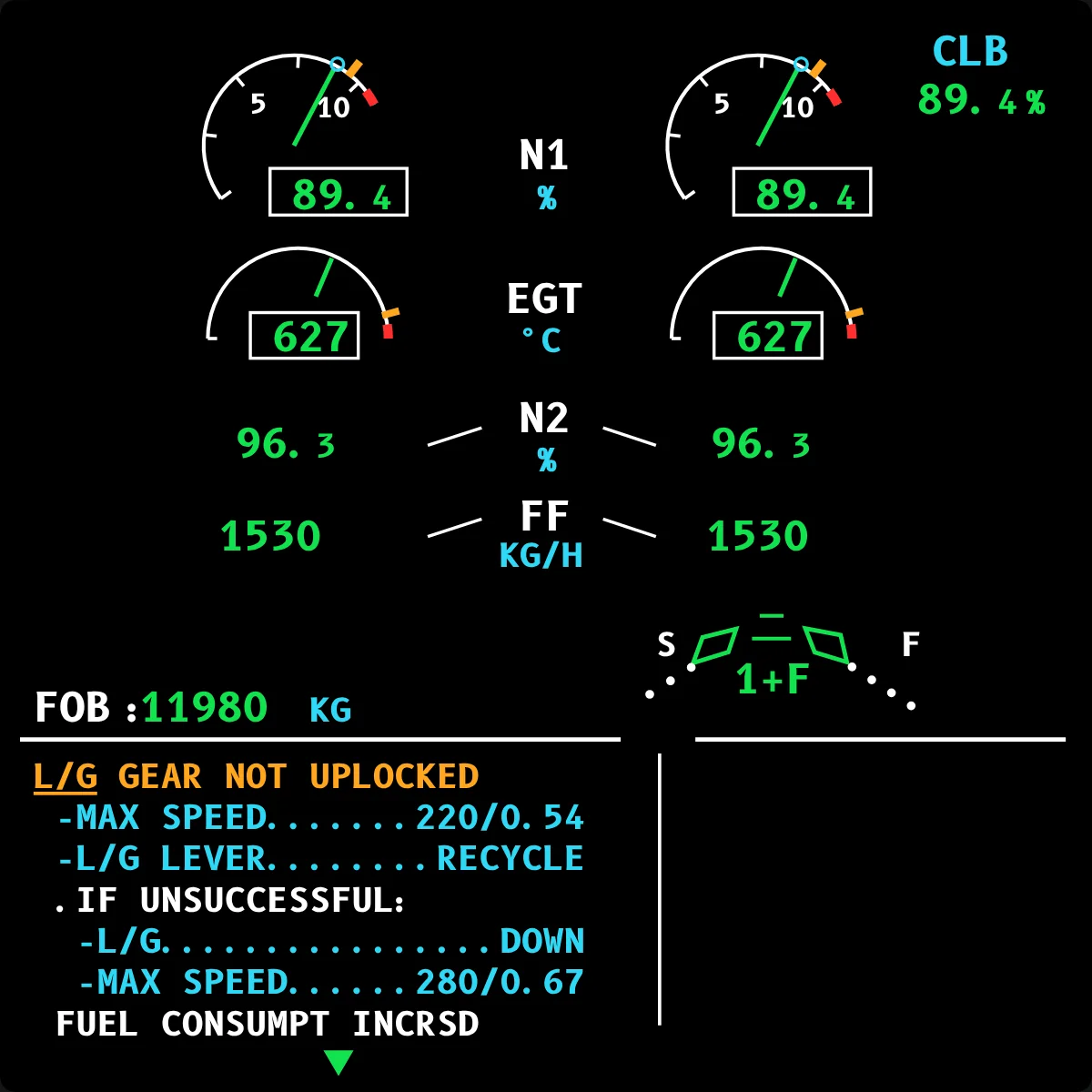
A level 2 caution: a single chime, the MASTER CAUT light steady amber and the title in amber on the E/WD, with the WHEEL page on the SD. The FCOM's own note calls it a warning; its title is amber.
Only one of the three branches applies: the FCOM marks them with black squares, which the ECAM does not display. With the doors not closed and no shock absorber fault, the lines are MAX SPEED 220/0.54 and L/G LEVER RECYCLE, then, under IF UNSUCCESSFUL, L/G DOWN and MAX SPEED 280/0.67. FUEL CONSUMPT INCRSD and FMS PRED UNRELIABLE are printed at the branch's own level, not under IF UNSUCCESSFUL.
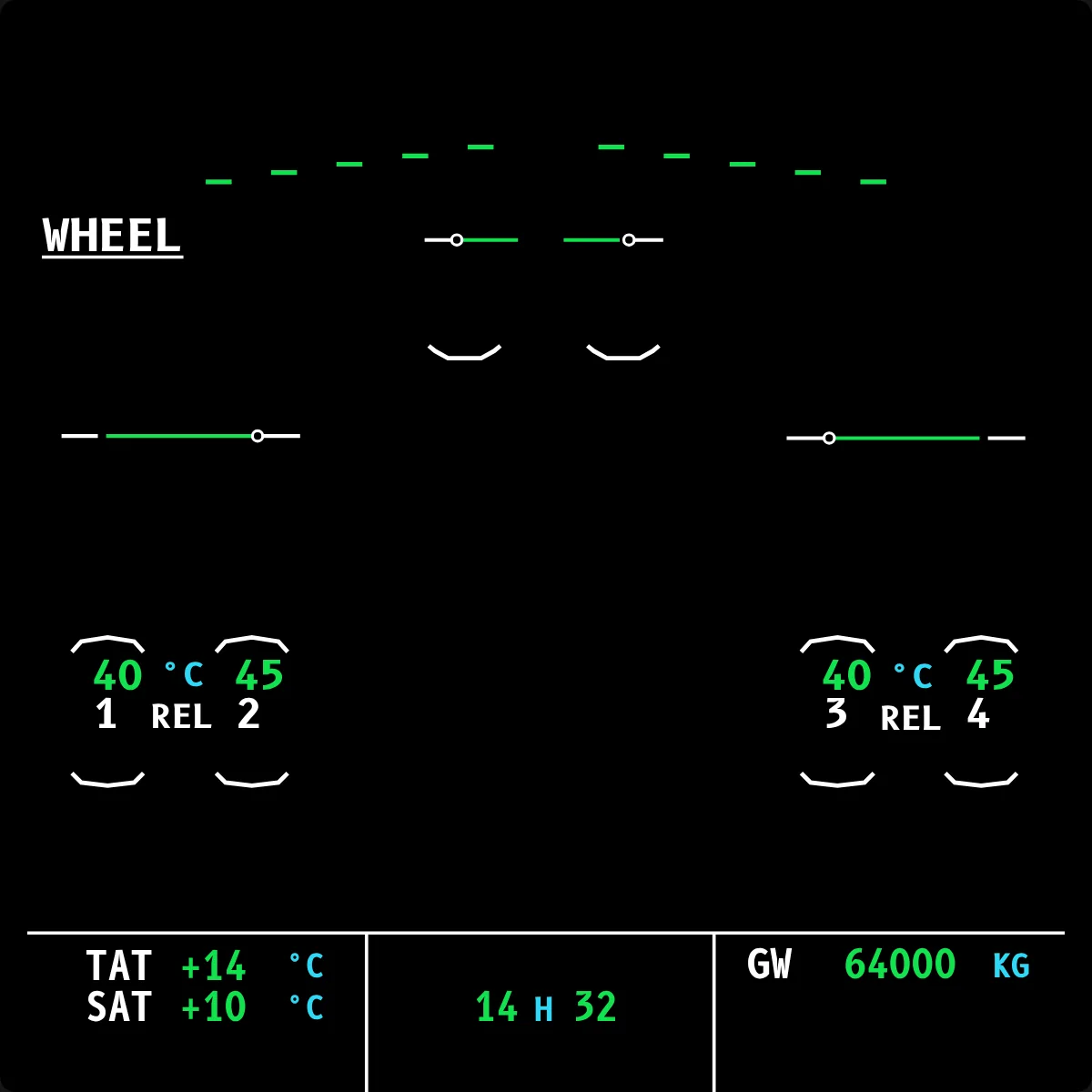
On the WHEEL page each gear has two triangles, red when one LGCIU detects the gear in transit, and each door has its symbol: green when locked up, amber in transit or fully open.
The caution is not raised live on this page: the E/WD picture beside the answer is the ECAM Trainer's at the alert, in the climb with the gear lever up.
Sources FCOM DSC-31-10 WARNING/CAUTION CLASSIFICATION / FCOM DSC-31-30 ATTENTION GETTERS / FCOM DSC-31-20 SYSTEM PAGES / FCOM PRO-ABN-LG L/G / FCOM PRO-ABN-ABN-00 INTRODUCTION / FCOM DSC-32-10-40 WHEEL SD PAGE
Why do the doors decide the procedure?
The gear doors are fitted to the gear struts and operated mechanically by the gear; they close at the end of the retraction, and all gear doors open while the gear is retracting or extending.
With the doors closed, the one line is AVOID EXCESS G FACTOR, and the FCOM gives the reason: the gear rests on the doors, and excessive load factors could damage the door structure.
With the doors not closed and a shock absorber fault, the lines are MAX SPEED 220/0.54, L/G DOWN and MAX SPEED 280/0.67, with no recycle. With the doors not closed and no shock absorber fault, the recycle comes first.
The two speeds are the same figures as the gear's speed limits: 220 kt or M 0.54 is the maximum speed at which the gear may be retracted, and 280 kt or M 0.67 the maximum speed with the gear extended. The FCOM's procedure gives no reason for them.
Sources FCOM DSC-32-10-10 GENERAL / FCOM PRO-ABN-LG L/G / FCOM LIM-AG-SPD MAXIMUM SPEEDS WITH THE LANDING GEAR EXTENDED
What does the recycle do?
The FCOM's note describes it: the lever down, a wait for the gear to downlock and the doors to close while the crew monitors the WHEEL page, then the lever up. "The active LGCIU changes when the landing gear is recycled."
One LGCIU controls a complete gear cycle, then switches over automatically to the other at the end of the retraction; it also switches over in case of failure. With one LGCIU failed, the remaining one controls the gear.
Sources FCOM PRO-ABN-LG L/G / FCOM DSC-32-10-10 LANDING GEARS AND DOORS OPERATION / FCOM DSC-32-10-20
Two LGCIUs, one gear cycle each
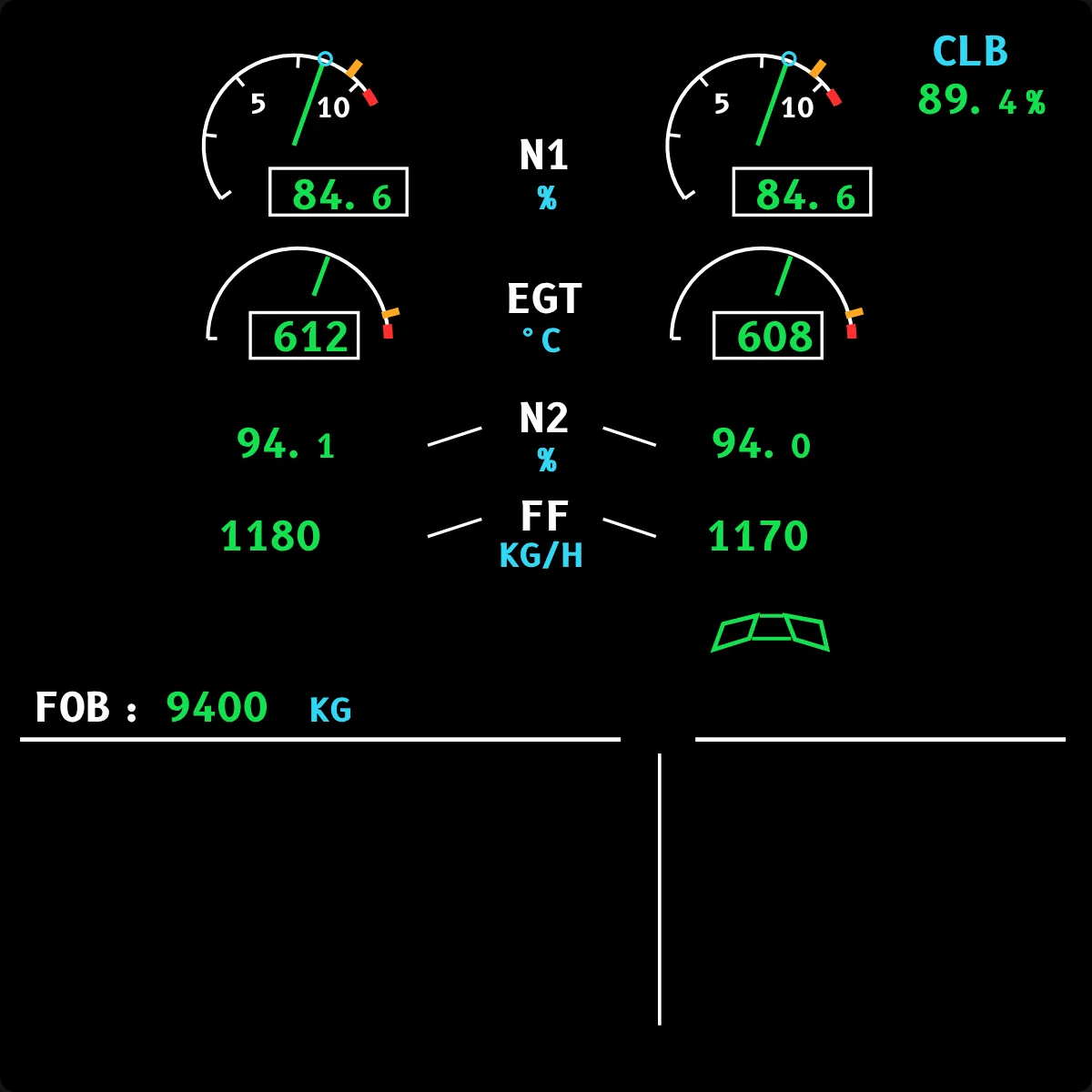
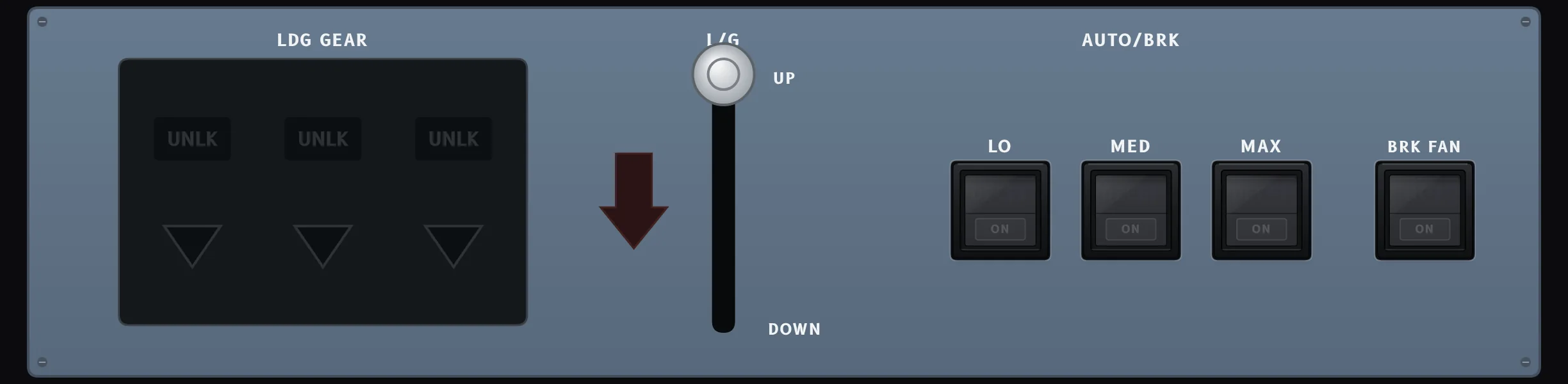
In flight with the gear up and locked, the lever at UP on the panel below and the WHEEL page beside it. Press the button to lose one LGCIU.
The alert Fail LGCIU 1
A caution of its own, L/G LGCIU 1 FAULT: the remaining LGCIU now controls the gear. The WHEEL page draws its amber crosses beside each gear, with the gear up; the FCOM describes them replacing the right triangle.
Sources FCOM PRO-ABN-LG L/G LGCIU 1(2) FAULT / FCOM DSC-32-10-20 / FCOM DSC-32-10-40 WHEEL SD PAGE
What moves the gear, and when is its supply cut?
The gear and doors are electrically controlled and hydraulically operated. The lever sends electrical signals to both LGCIUs, which control the green hydraulic supply to the gear through selector valves.
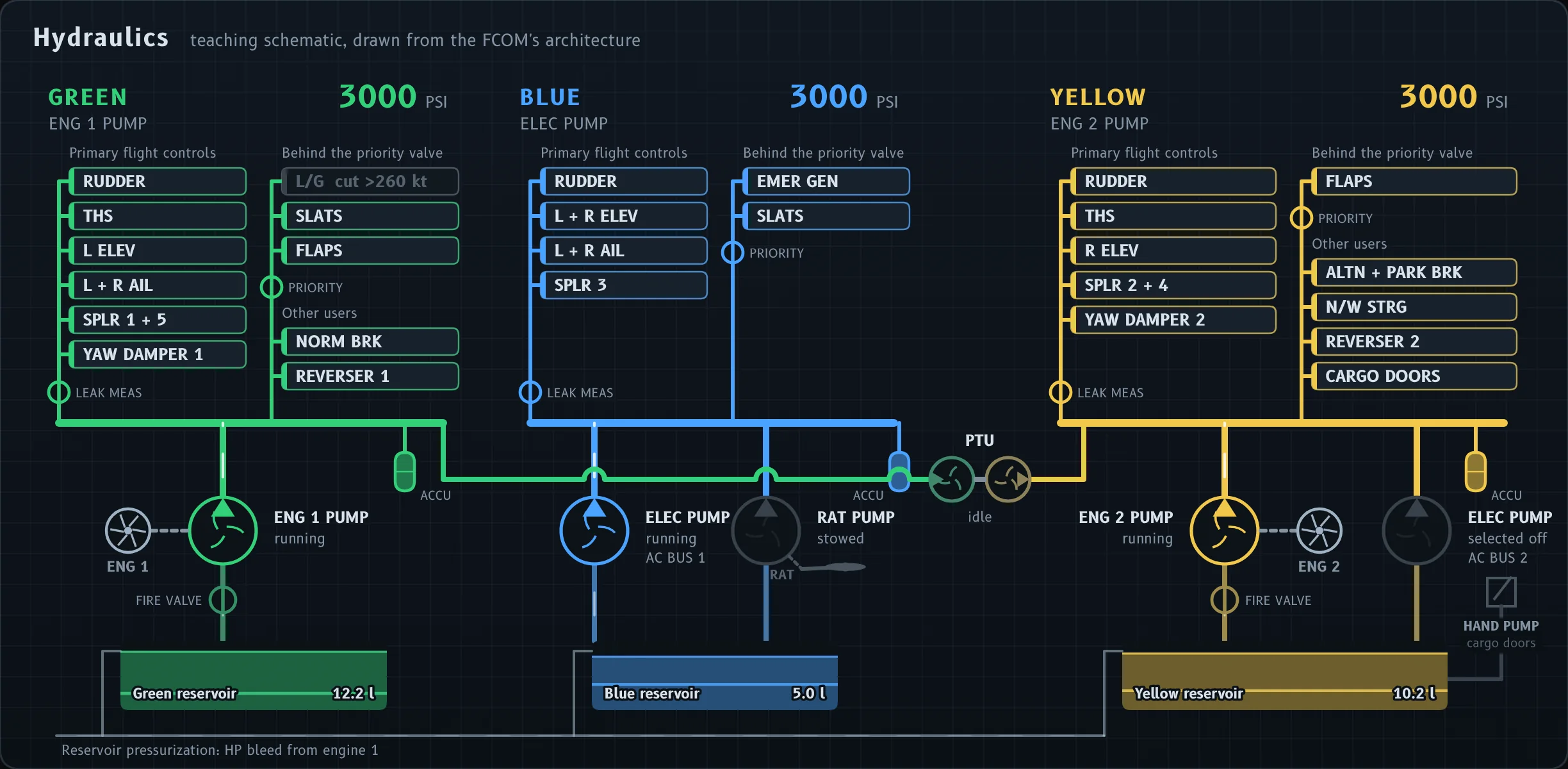
The green system actuates all gear and doors. Above 260 kt a safety valve automatically cuts off the hydraulic supply to the landing gear system; below 260 kt the supply remains cut off as long as the gear lever is up.
Sources FCOM DSC-32-10-10 GENERAL / FCOM DSC-32-10-40 LANDING GEAR SELECTOR LEVER / FCOM DSC-32-10-10 LANDING GEARS AND DOORS OPERATION
The safety valve in the cruise
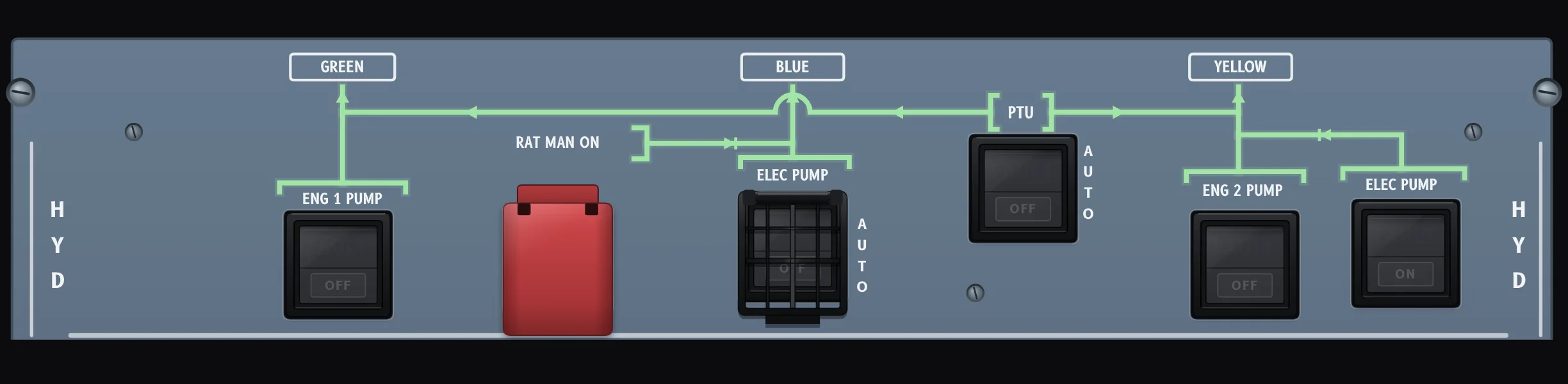
In the cruise above 260 kt, both engines running. On the HYD schematic, L/G is among green's users behind the priority valve, marked as cut above 260 kt. The HYD panel is below.
-
Predict You switch the green engine pump off. What happens to green and the gear's supply?
Try it Switch ENG 1 PUMP off.
The PTU takes over and green is pressurised from yellow, yet L/G stays marked cut above 260 kt: the safety valve, not the pump, decides the gear's supply at this speed.
The drawing marks the cut by speed only. The FCOM adds the lever: below 260 kt, the supply stays cut as long as the lever is up.
Sources FCOM DSC-29-10-20 POWER TRANSFER UNIT (PTU) / FCOM DSC-32-10-10 LANDING GEARS AND DOORS OPERATION
What does STATUS lose?
STATUS gives MAX SPEED 280/.67 and FUEL CONSUMPT INCRSD in blue, FMS PRED UNRELIABLE in green, and L/G RETRACT under INOP SYS in amber.
If the flight continues with the gear extended, its guidance is to disregard the FMS fuel predictions, and its altitude and speed predictions, time predictions being valid only in cruise; not to use the managed speed mode, except in approach; and not to use the CLB and DES autopilot modes.
Sources FCOM PRO-ABN-LG L/G / FCOM DSC-31-20 STATUS PAGE
What is lost afterwards?
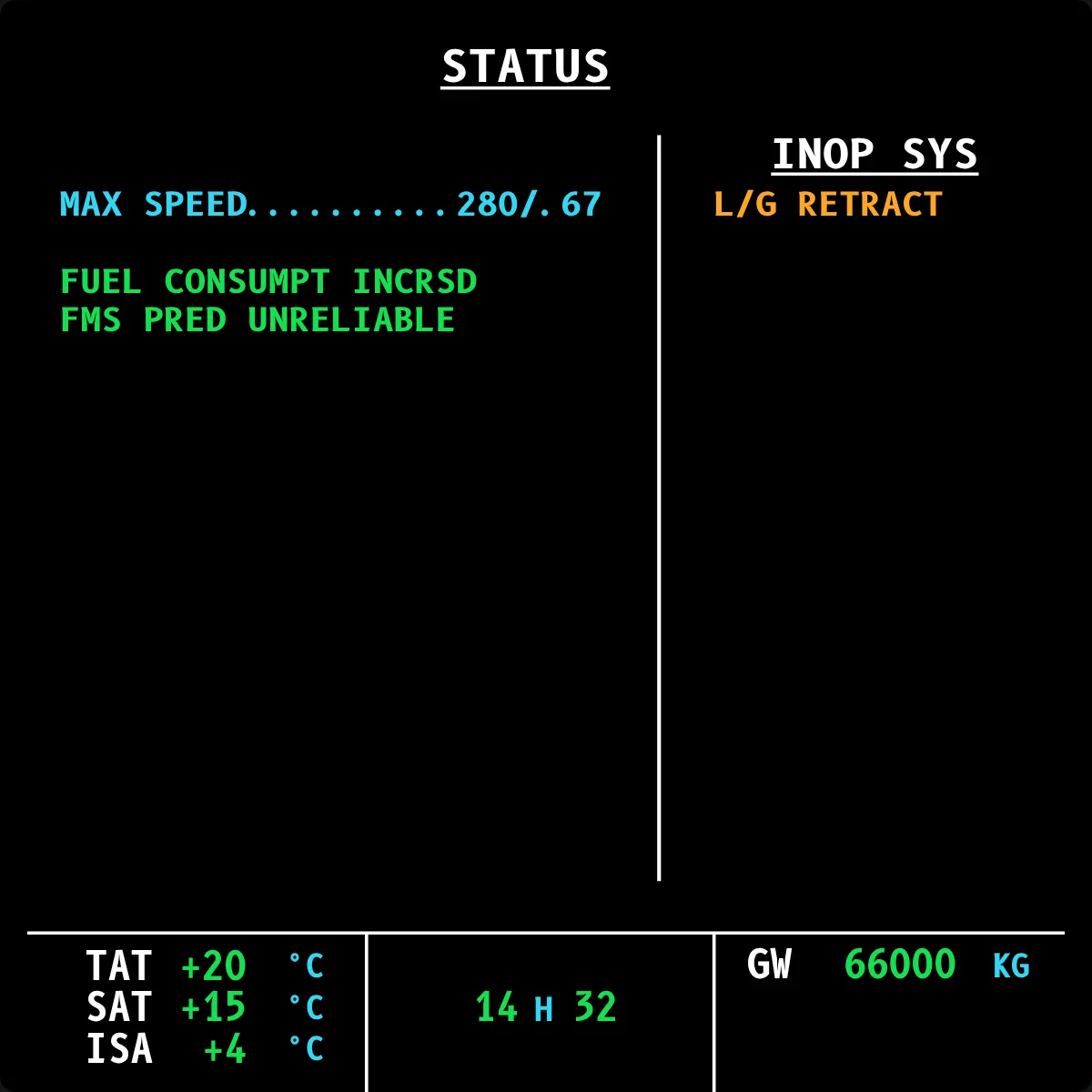
STATUS is the aircraft's operational summary: limitations in blue, information in green, inoperative systems in amber. After this caution it reads MAX SPEED 280/.67, FUEL CONSUMPT INCRSD, FMS PRED UNRELIABLE and, under INOP SYS, L/G RETRACT.
The FCOM prints one STATUS, for all aircraft, with FUEL CONSUMPT INCRSD in blue; the ECAM Trainer draws it green, as information. On the E/WD the FCOM prints FUEL CONSUMPT INCRSD and FMS PRED UNRELIABLE in blue; the picture draws them in white.
Sources FCOM DSC-31-20 STATUS PAGE / FCOM PRO-ABN-LG L/G
A319ceo, A320ceo, A320neo, A321neo: what differs?
| A319ceo, A320ceo | A320neo, A321neo | |
|---|---|---|
| The caution, its procedure and STATUS | The same in every version | The same in every version |
| The gear speed limits | The same on all four types: 220/0.54 to retract, 250/0.60 to extend, 280/0.67 extended | The same on all four types: 220/0.54 to retract, 250/0.60 to extend, 280/0.67 extended |
Sources FCOM PRO-ABN-LG L/G GEAR NOT UPLOCKED / FCOM PRO-ABN-LG L/G / FCOM LIM-AG-SPD MAXIMUM SPEEDS WITH THE LANDING GEAR EXTENDED

Work L/G GEAR NOT UPLOCKED as a crew
Read and do each line against the FCOM, with the E/WD, the SD page and the overhead following your hands, the PF and PM calls, and a debrief that says what you missed.
Work this failure in the ECAM TrainerGo further
Written in our own words from the FCOM and the FCTM; each part names the units it rests on. The E/WD, the STATUS and the live aircraft are the platform's own ECAM and systems model, the same the ECAM Trainer and the flight deck run. This page explains the procedure; it is not the procedure. Aircraft differ by type, engine and options: your aircraft's FCOM, your QRH and your operator's procedures always come first. How we write and check these pages.
Every ECAM procedure, line by line, against the FCOM.
The ECAM Trainer works 108 scenarios with the E/WD, the SD page and the overhead following your hands. Start free today, or open everything with A320 Knowledge+.
For study and revision only. Always follow your operator's approved documentation and procedures. A320 Knowledge is independent and not affiliated with Airbus.
Related
- L/G DOORS NOT CLOSEDAn amber caution for a landing gear door that has not locked up.
- L/G LGCIU 1+2 FAULTAn amber caution for the loss of both computers that sequence the landing gear.
- L/G LGCIU 1 FAULTAn amber caution for one of the two computers that sequence the landing gear.
- L/G GEAR NOT DOWNLOCKEDA red warning for a gear that has not locked down with the lever down.
- A320 landing gear and brakesThe system guide, with the live aircraft
- Every ECAM procedureThe alerts the ECAM Trainer works, grouped by system